


How to turn a prototype into a product
The short answer
Define what working means, in numbers with their conditions. Build the riskiest part first and test it where it will be used. Then design for manufacture and prove the product in three builds: engineering, design and production. A prototype proves an idea once. A product has to work every time, for people who never met the engineer.
By the engineers at WhiteHat Design Studio. Published .
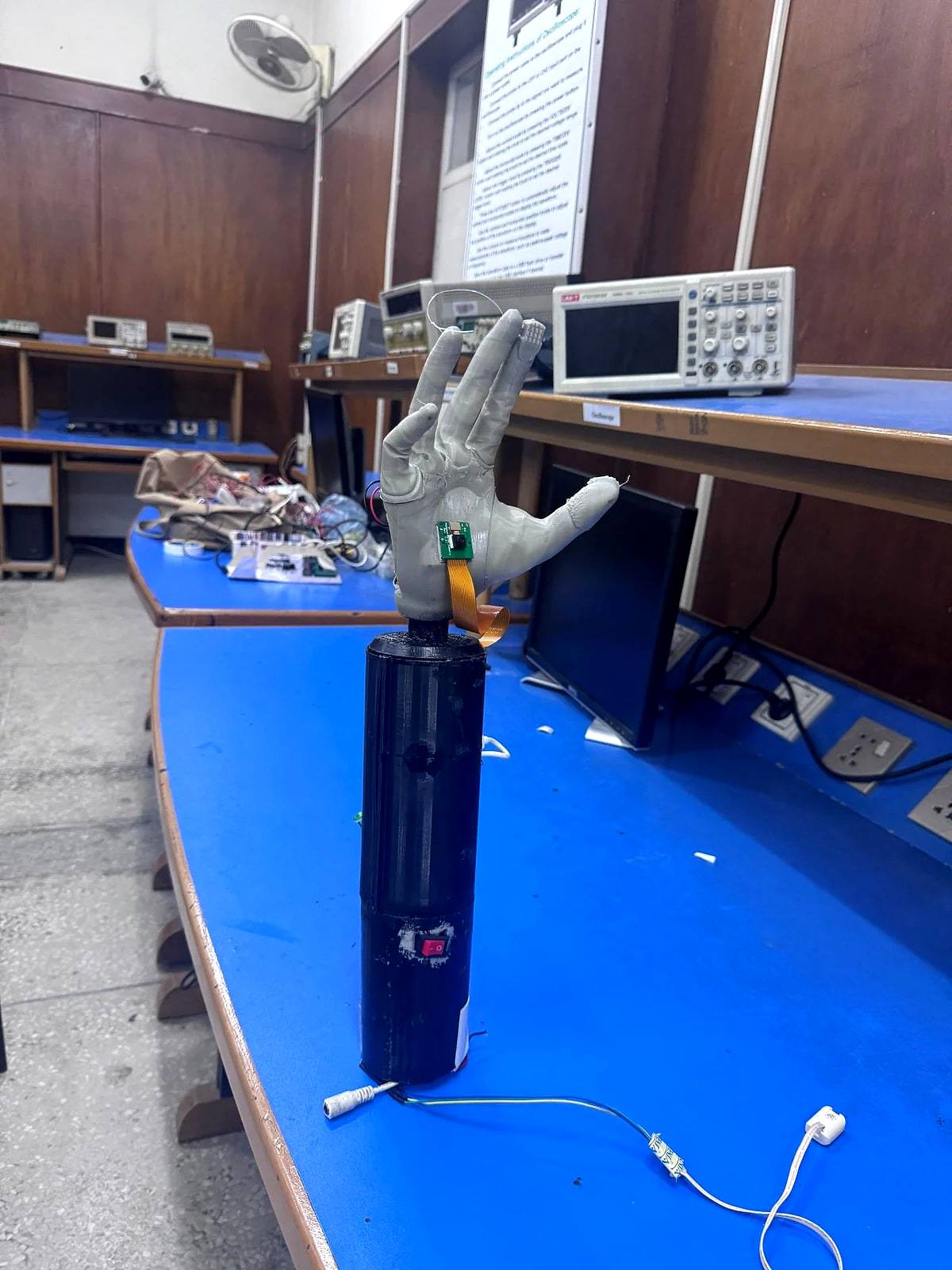
What changes when it leaves the lab
| What changes | A prototype | A product |
|---|---|---|
| Who runs it | The engineer who built it | Someone who has never met the engineer |
| How many | One, nursed along | Every unit, built the same way |
| Where | The bench, in good light | Wherever the customer puts it |
| When it breaks | Fixed by hand, on the spot | Diagnosed from a distance, or swapped |
| Parts | Whatever was in stock | Parts you can buy for years, with an alternative for each critical one |
Most prototypes that stall do so on one of these lines, not on the idea.
Five steps, in this order
- Define what working means. What the product has to do, where it will run and how anyone will know, as numbers with units and conditions.
- Build the riskiest part first. Find the part most likely to fail, whether it is a motor, a model, a protocol or a market, and build that before anything else. If it is going to fail, it should fail early and cheaply.
- Test it where it will live. On the floor, the road or the bench where it will run, not only in the lab, and keep the log, including what failed.
- Hand over the files. Everything someone else needs to build, run and change it.
- Launch, measure and improve. Customers arrive, the numbers come in, and you act on them.
These are the steps we work in, across every input a product needs.
Three builds before production
Hardware teams prove a product in three validation builds. Names and quantities vary between companies, but the questions stay the same:
- EVT, the engineering validation test, asks whether the engineering concept works: the core functions, the parts and the technical feasibility.
- DVT, the design validation test, asks whether the complete design meets its requirements: the integrated design, its performance, its durability.
- PVT, the production validation test, asks whether the approved design can be produced reliably, at the volume and quality you need.
As one guide to the stages puts it, DVT validates the product, while PVT validates the process used to build it.
Design for manufacture
Design for manufacture means designing a product so it costs less to make and is easier to make. In practice it means parts that can be bought in volume, boards a factory can assemble and test, enclosures a tool can produce, and firmware that can be loaded and checked on the line. It is much cheaper to do on the drawing than after the tooling is cut.
Be honest about where you are
We publish where each of our own systems stands. ReFlex is a laboratory research prototype, not a medical device. Auto Vendi’s published tests are indoors, in corridors and a lobby: its chassis is built for smooth and rough ground, but no outdoor test is published yet. Saying so is not modesty. It tells you, and us, what the next test has to be.
What to have before you talk to a manufacturer
- Native design files, not only PDFs
- Schematics, board files and manufacturing outputs
- A bill of materials with an approved alternative for each critical part
- Mechanical drawings with tolerances
- The firmware source, with instructions to rebuild the same image
- Test procedures, and the logs from the last run
The handover checklist lists the rest. We do not run volume manufacturing, and we do not certify products: we design for the standard you need, work with your test house, and hand over files your manufacturer can build from. If you are not sure which input is holding your product back, the weak input check asks four plain questions.
Questions people ask next
What do EVT, DVT and PVT mean?
They are three validation builds. EVT asks whether the engineering concept works, DVT whether the complete design meets its requirements, and PVT whether the approved design can be produced reliably.
What should I have before I talk to a manufacturer?
Native design files, schematics and board files, a bill of materials with an approved alternative for each critical part, mechanical drawings, the firmware source with its build instructions, and the test procedures.
Do you manufacture?
We do not run volume manufacturing. We hand over files your manufacturer can build from, and we can work with them.