


Case study, assistive robotics
HARP, an assistive humanoid robot
A humanoid robot that finds its own way through a building, turns to face the person in front of it and holds a conversation on its own onboard computer.
A hardware, C AI
What is HARP?
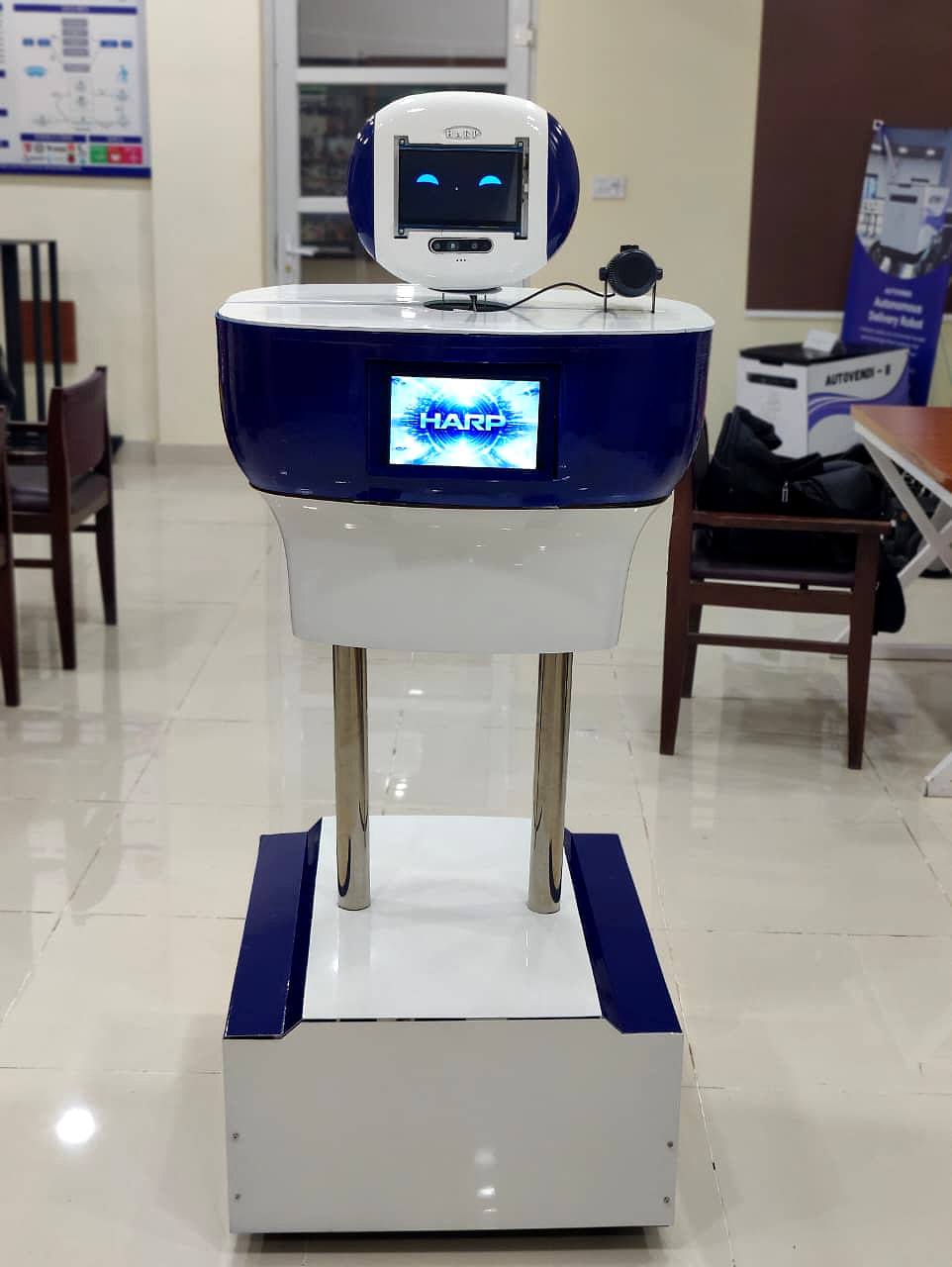
HARP is an assistive humanoid robot designed and built by WhiteHat Design Studio. It is a platform for reception, guidance and research into how people and robots work together. It is modular, built to be set up for different settings.
It joins two inputs. A is the robot itself: the base, the head, the screens and the computing on board, built around a Raspberry Pi 5. C is what lets it behave like a host rather than a kiosk: navigation on a predefined map, a camera that finds the person in front of it, and a language model that answers without leaving the robot.
How HARP works.
Find its way
HARP drives itself on a predefined map, using visual odometry and SLAM. A gamepad takes over when an operator needs it.
Face the person
A camera in the head finds faces, and the head turns to follow the person in front of it.
Hold a conversation
An onboard language model answers in real time, on the robot itself.
Show it
Two screens, an expressive face and a display on the body, show people what the robot is doing.
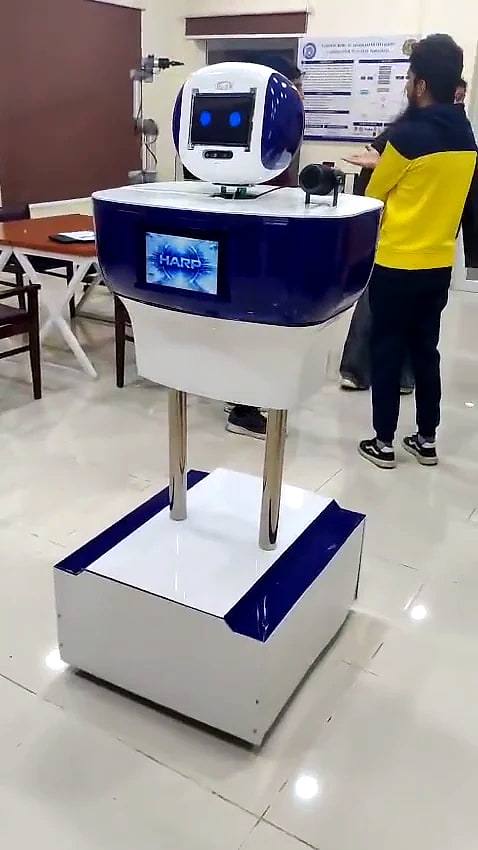
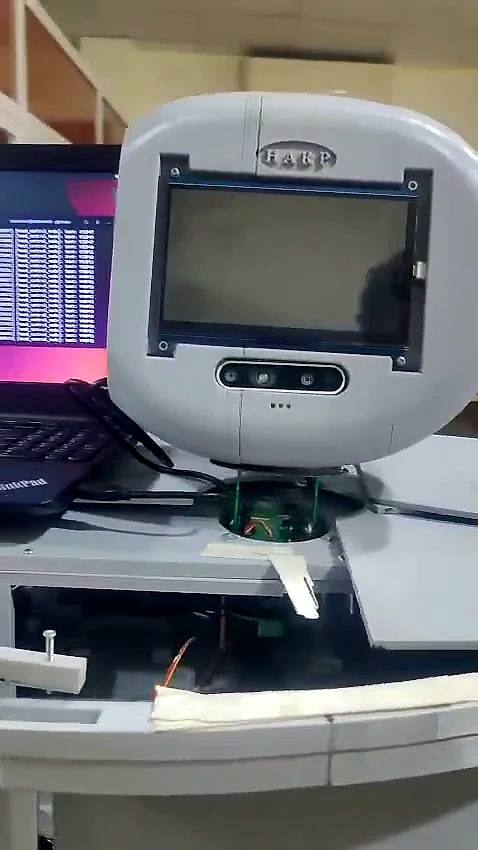
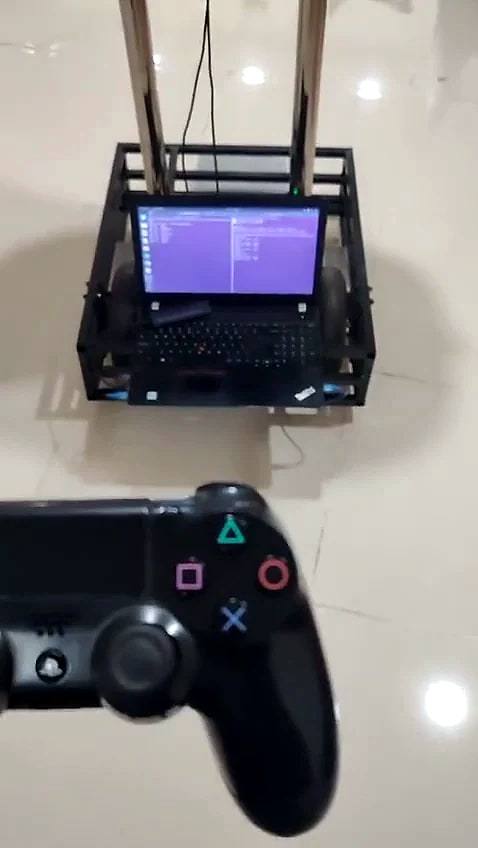
On film.
Clips from the log. They have no sound, and each one says what happens.
Questions about HARP
What is HARP?
HARP is an assistive humanoid robot designed and built by WhiteHat Design Studio, for reception, guidance and research into how people and robots work together.
What computer does HARP use?
HARP is built around a Raspberry Pi 5, and its language model runs on the robot itself.
Can HARP find its own way around a building?
Yes. It drives itself on a predefined map, using visual odometry and SLAM, and a gamepad takes over when an operator needs it.
What we do not claim
- No measured result is published yet. Navigation accuracy, response time and running time will appear here once measured, with their conditions.
Sources
Published , updated .
Tell us what has to work.
One sentence is enough. An engineer will reply.