


Input C, AI
AI: Computer vision and edge AI
Intelligence that runs where the work is.
WhiteHat Design Studio builds computer vision and edge AI that run on the device that needs them. HARP runs its language model on the robot itself, and ReFlex runs its grip model on a Raspberry Pi 5. A model only counts when it works on data from where it will run.
Vision and models on the device
What it will look like.
Not a mock-up. This is our own system, running.
Who it is for
Founders and CTOs at robotics and device companies
The worry The prototype never becomes a product.
What we do Models sized for the robot's own computer, so the machine still works when the network does not.
Heads of operations and quality leads
The worry A model that works in the lab and not on the floor.
What we do A model only counts when it works with your cameras, in your light. That is the standard for input C.
What we build.
Real-time computer vision, detection and tracking, onboard language models and edge deployment.
Real-time computer vision
Cameras that understand what they see, fast enough to act on. HARP finds faces and turns its head towards the person in front of it, and SceneScribe answers a spoken question about what its camera sees.
Detection and tracking
Finding objects in each frame and following each one between frames, so a system can count, follow or avoid them. Auto Vendi runs YOLOv8 detection alongside its mapping.
Onboard language models
Conversation that happens on the machine. HARP's language model runs on the robot itself.
Edge deployment
Models sized for the hardware they run on. ReFlex runs a custom-trained MobileNetV2 through TensorFlow Lite on a Raspberry Pi 5 to choose a grip.
Switch it off.
An input on its own is not a product, and a product without AI is not finished either. Try it.
Switch AI off and see what happens to the product. The other inputs link to their own pages.
Output Y = 1
It works, and customers are using it.
Evidence.
Published work that used this practice, with what each one does.
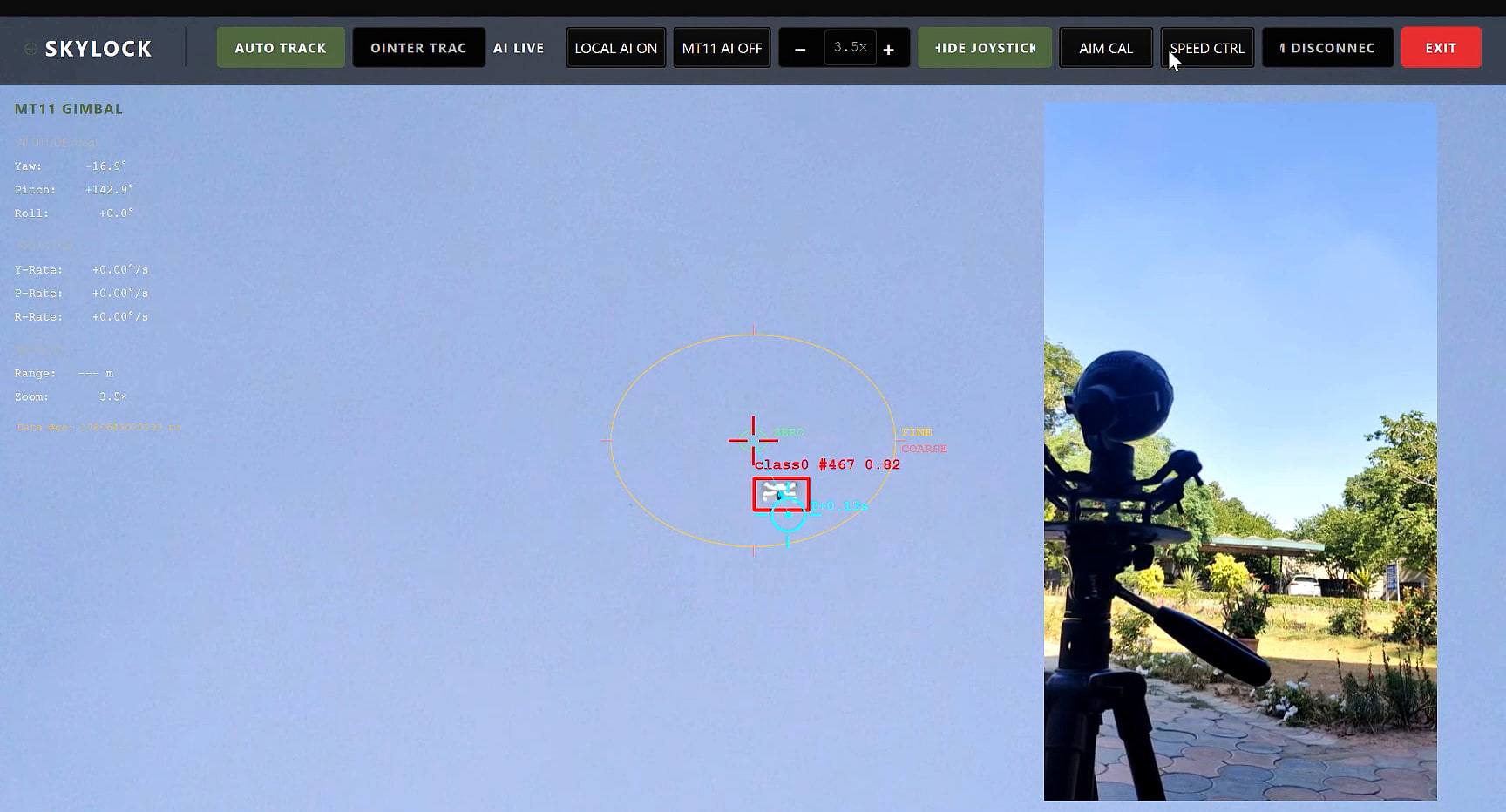
Case study, aerial surveillance
SKYLOCK
Finds drones in live camera feeds, predicts where each one is going and keeps a gimbal camera on it, from the operator's console or on its own.
A hardware, B software, C AI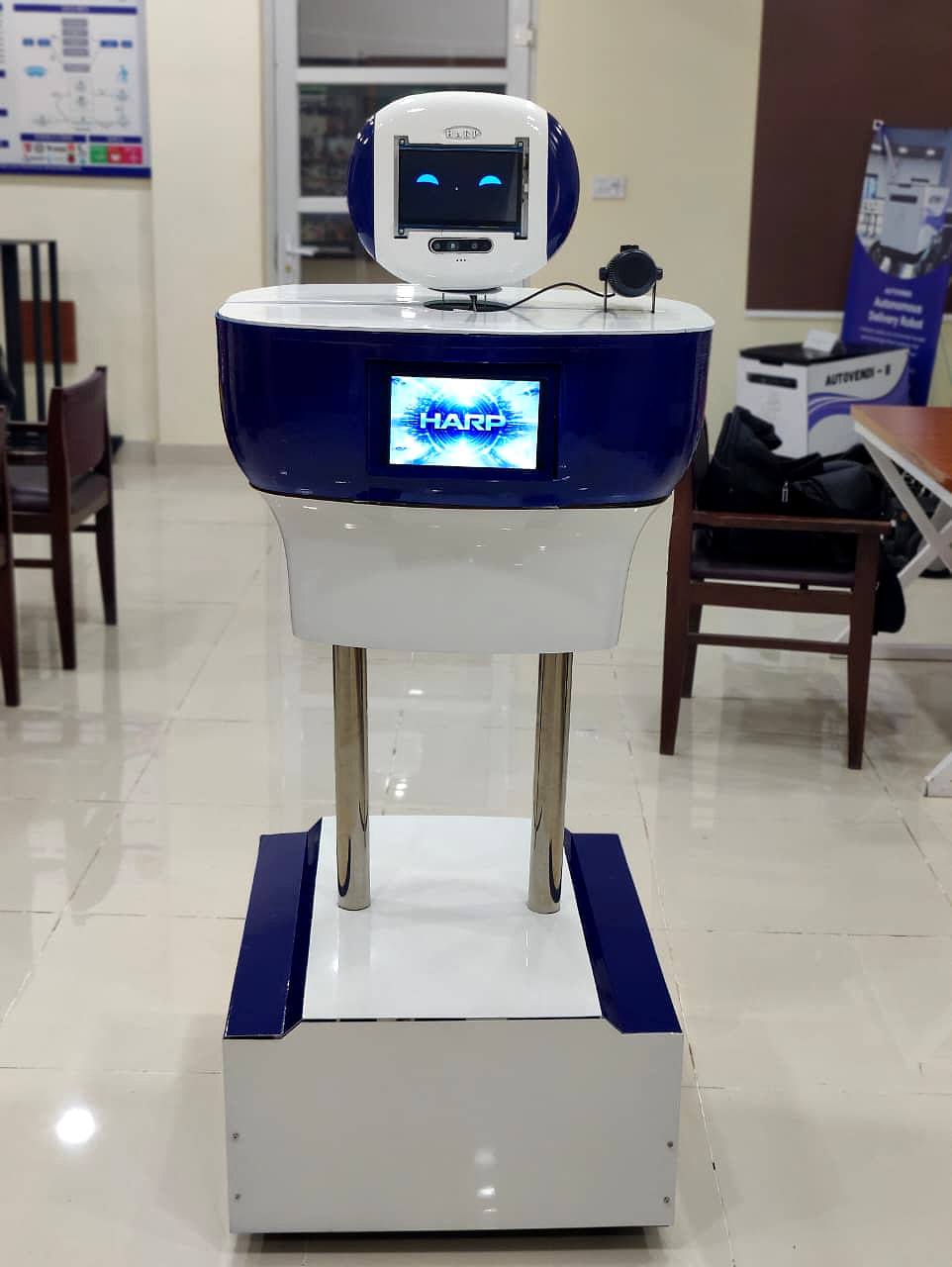
Case study, assistive robotics
HARP
Navigates a mapped building, tracks faces and holds a conversation with an onboard language model, built around a Raspberry Pi 5.
A hardware, C AI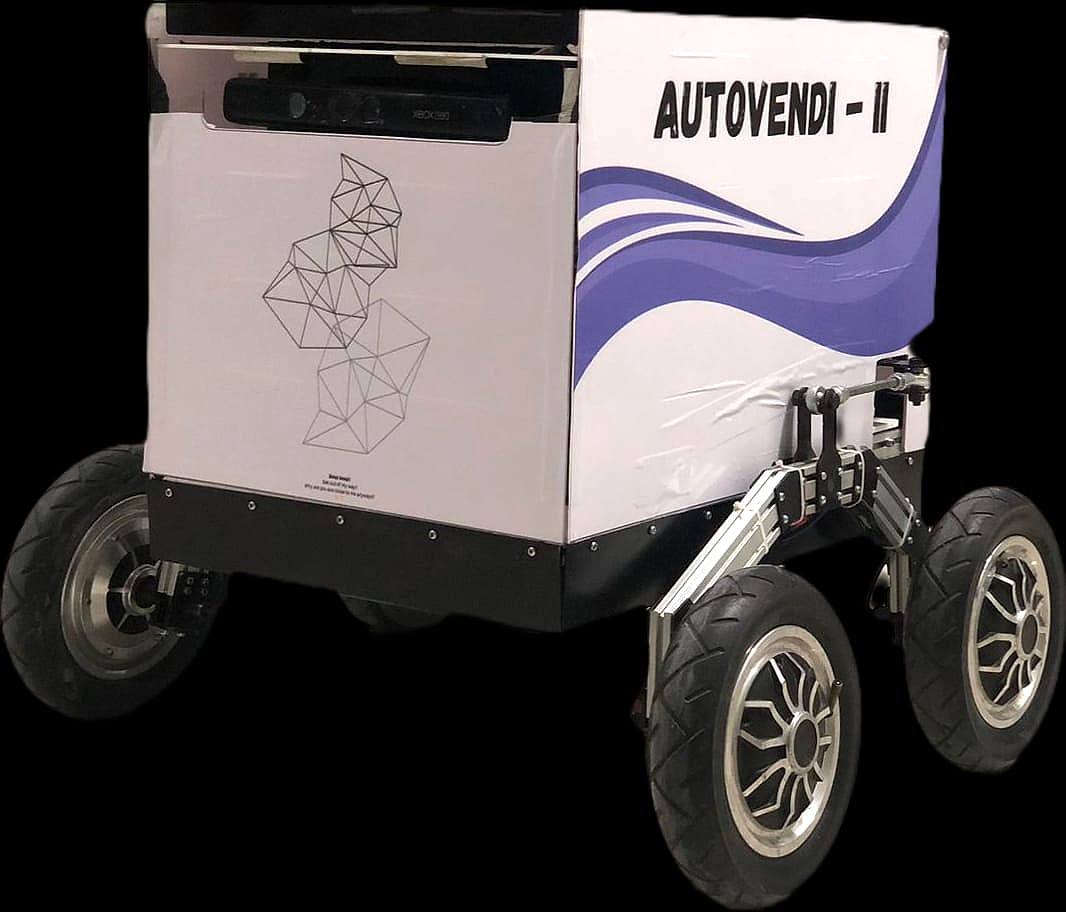
Case study, last-mile logistics
Auto Vendi
Maps its route, avoids obstacles and delivers in a locked compartment that the phone app releases.
A hardware, B software, C AI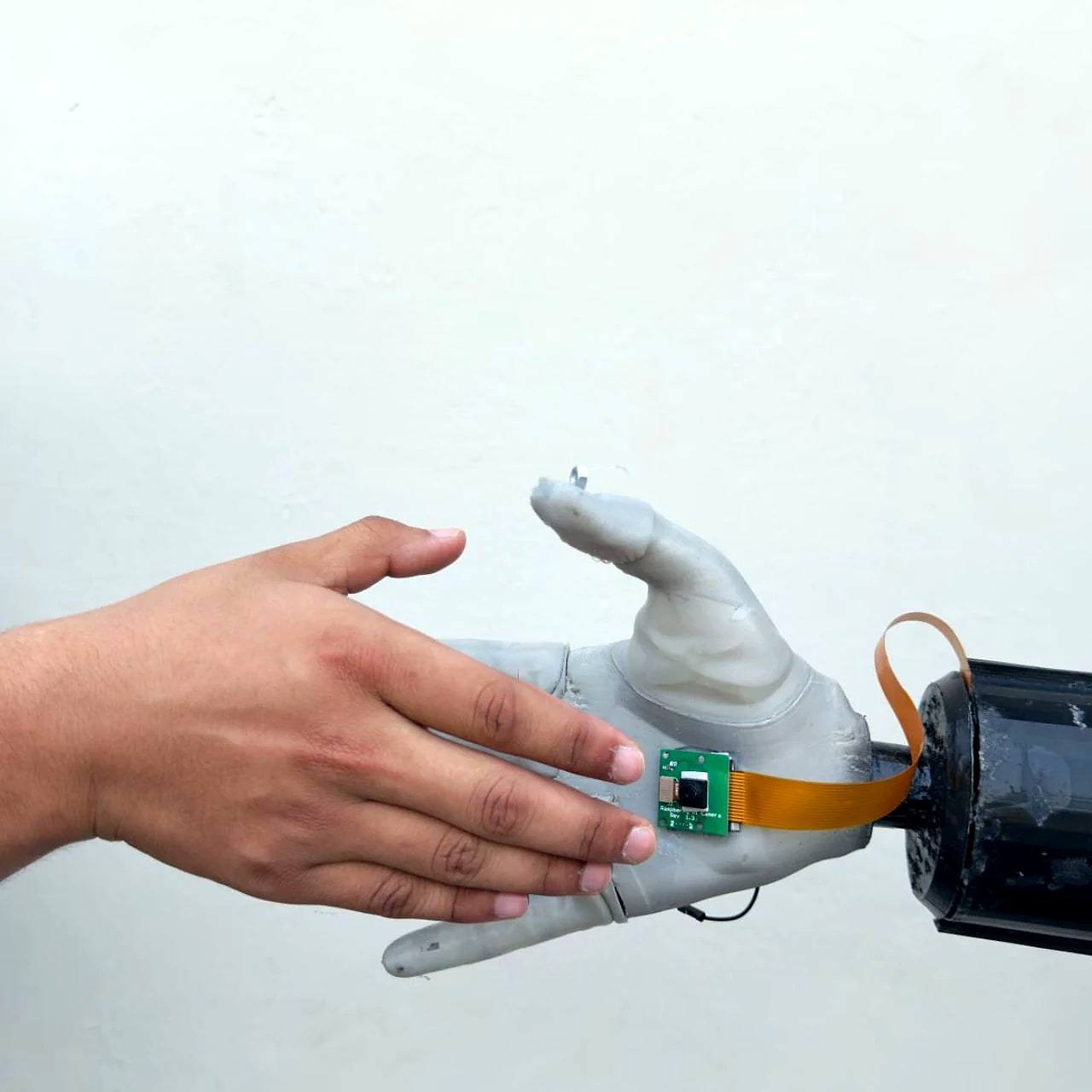
Research prototype, assistive robotics
ReFlex
Reads forearm muscle signals, chooses a pinch or tripod grip from what the palm camera sees, and stops each finger on encoder feedback.
A hardware, C AI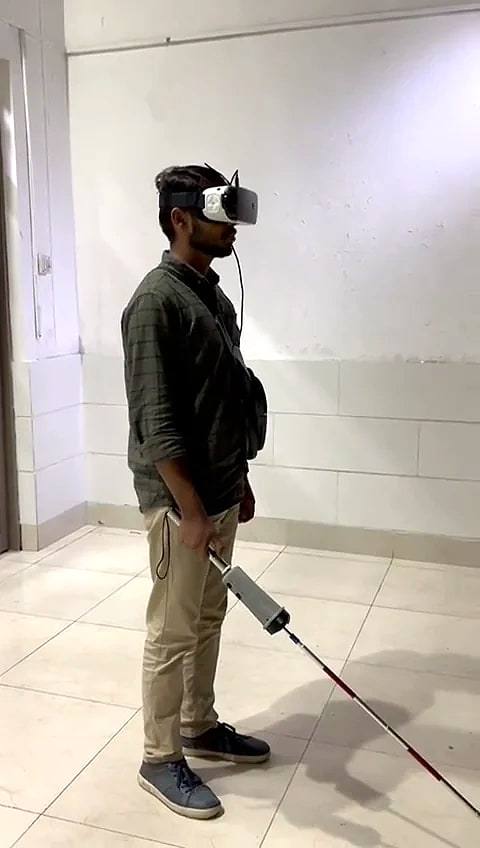
Prototype, assistive technology
SceneScribe
Describes what the camera sees, in answer to the wearer's own question, through earphones.
A hardware, B software, C AIHow it connects.
An input on its own is not a product. These are the places AI meets the rest.
AI and hardware
In ReFlex the palm camera, the model and the finger motors are one loop. See the object, choose a pinch or tripod grip, close the fingers, stop on encoder feedback.
AI and software
SceneScribe's agents sit inside a workflow. Record the question, capture the image, turn speech into text, ask the agents, speak the answer.
AI and growth
Claims about AI need conditions. We write them the way we measure them, so a buyer's engineer can check them.
What we do not do
- We do not quote a model's accuracy without the data and conditions it was measured in.
- We do not ship a model that has only seen its training set. It is tested on data from where it will run.
- We do not offer emotion recognition or gender classification as a feature of anything we build.
Guides from this work
- How does drone detection work?
Drone detection finds a drone with one or more sensors: radar, a radio receiver, microphones or a camera. Each one has a blind spot, so the strongest systems combine them. A camera system such as SKYLOCK runs a detection model on every frame, predicts where the drone is going and turns a gimbal to keep it in view.
- Edge AI or cloud AI: where should your model run?
Run the model on the device when the machine has to keep working without a network, answer quickly or keep its data to itself. Run it in the cloud when the model is too large for the device and the answer can wait for the network. Many systems do both: fast decisions on the device, heavy work on a server.
- Visual SLAM vs LiDAR SLAM for indoor robots
SLAM lets a robot build a map and work out where it is on that map at the same time. Visual SLAM does it with cameras, which cost less and see detail but need light and texture. LiDAR SLAM does it with a laser scanner, which measures distance directly but costs more and can miss glass.
- How to turn a prototype into a product
Define what working means, in numbers with their conditions. Build the riskiest part first and test it where it will be used. Then design for manufacture and prove the product in three builds: engineering, design and production. A prototype proves an idea once. A product has to work every time, for people who never met the engineer.
- Why a vision model that works in the lab fails in the field
A vision model learns from the pictures it was trained on, so its accuracy falls when the light, the camera, the angle or the place changes. Researchers call this distribution shift. The answer is to collect pictures from where the model will run, test on those, and give every accuracy figure with the conditions it was measured in.
Questions buyers ask.
Does the model run on the device or in the cloud?
Where the work needs it. HARP runs its language model on the robot itself, and ReFlex runs its grip model through TensorFlow Lite on a Raspberry Pi 5.
Do you build custom computer vision systems?
Yes. SKYLOCK finds drones in live video with YOLO26, Auto Vendi runs YOLOv8 detection alongside its mapping, and HARP finds faces and turns to follow them.
Can a model run on a Raspberry Pi?
Yes, if it is sized for it. ReFlex runs a custom-trained MobileNetV2 through TensorFlow Lite on a Raspberry Pi 5 to choose a grip.
What does detection and tracking mean in practice?
Detection finds objects in each camera frame. Tracking follows each one from frame to frame, so a system can count them, follow them or keep clear of them.
How do you measure accuracy?
We do not quote a model's accuracy without the data and conditions it was measured in.
Do you offer emotion recognition?
We do not offer emotion recognition or gender classification as a feature of anything we build.
Tell us what has to work.
One sentence is enough. An engineer will reply.