


Competition robot
A tree-planting robot for the National Engineering Robotics Contest
A competition robot that follows a grid of lines, works out where to plant and places tree-marked blocks, built for NERC between September 2023 and April 2024.
A hardware
What is the tree-planting robot?
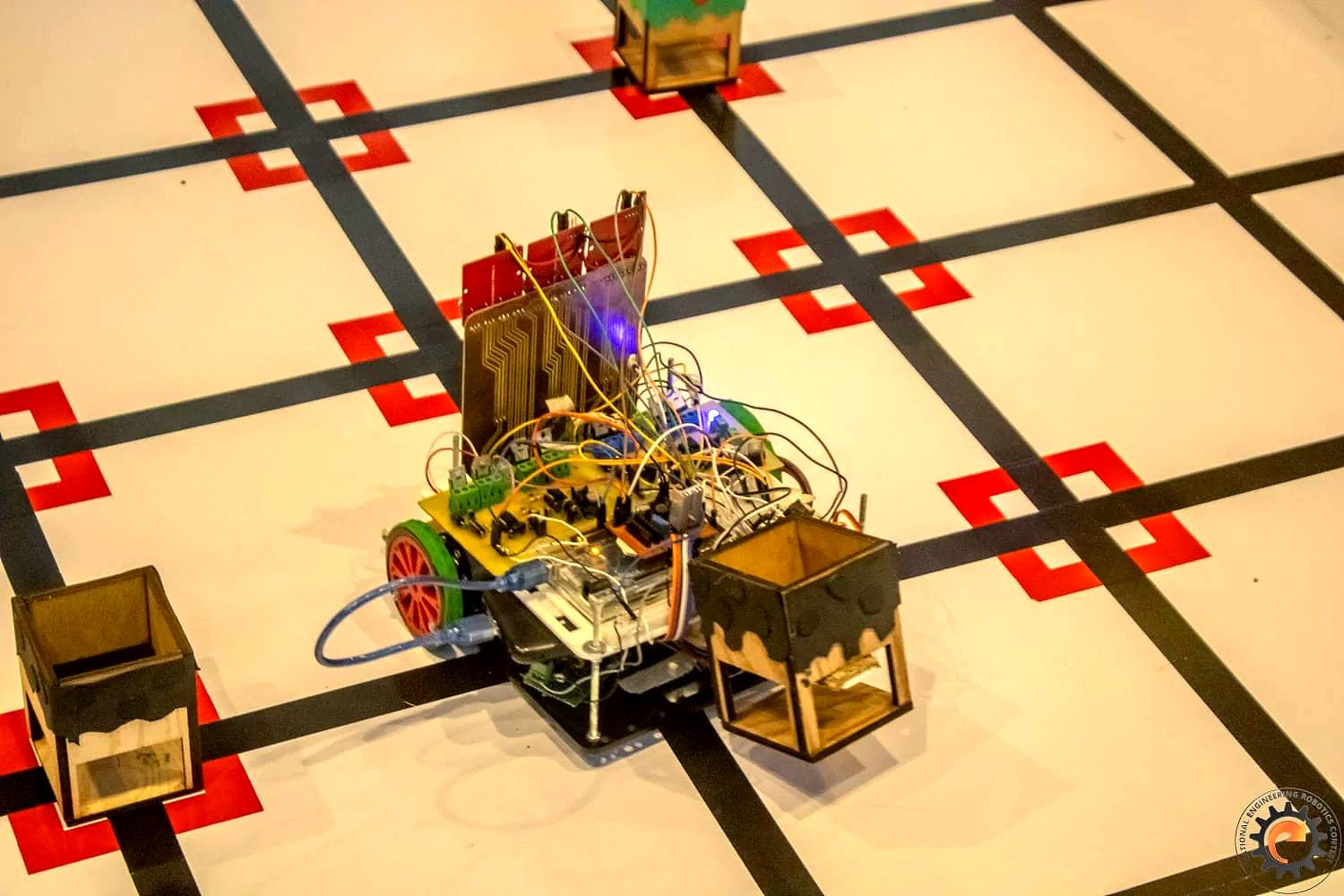
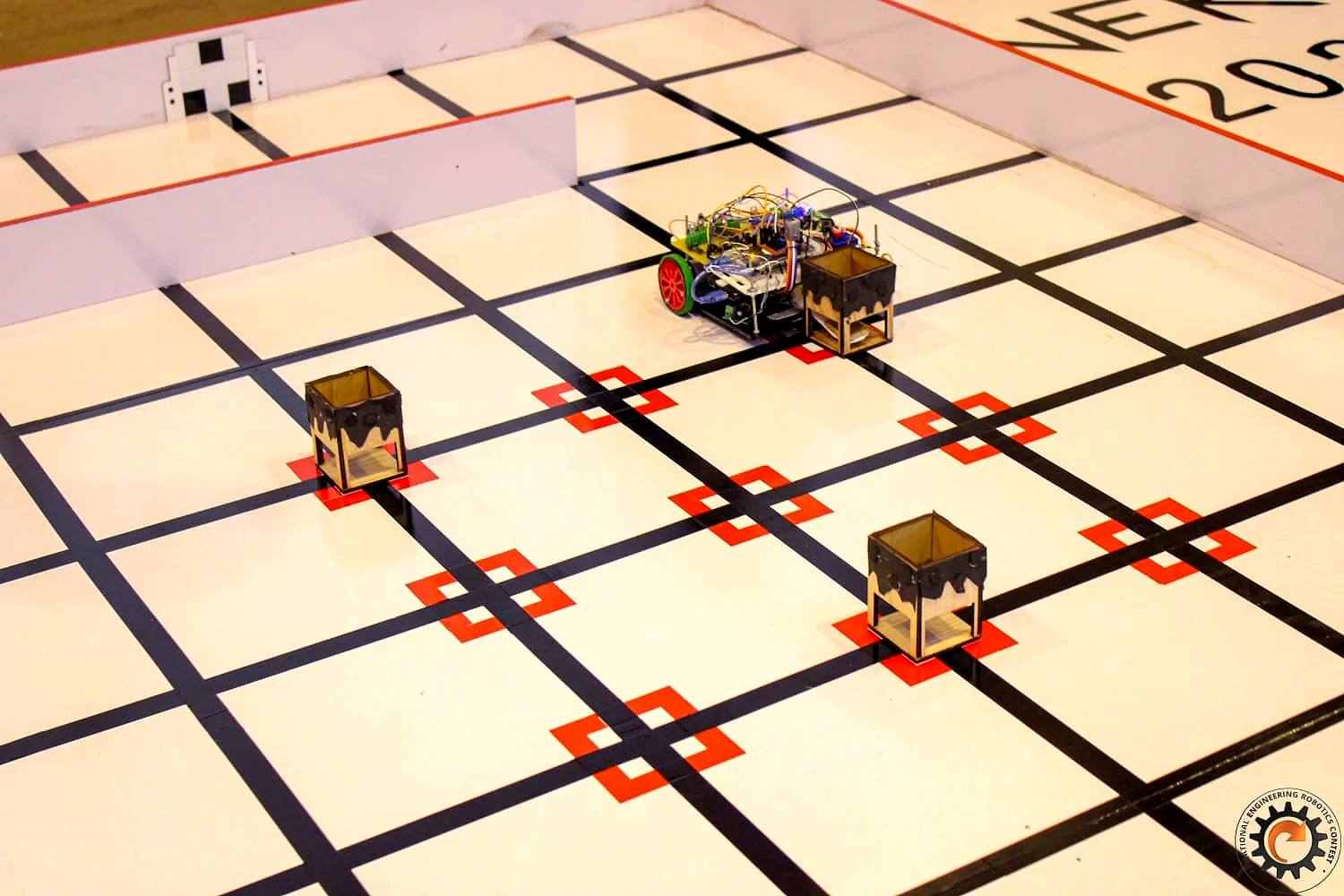
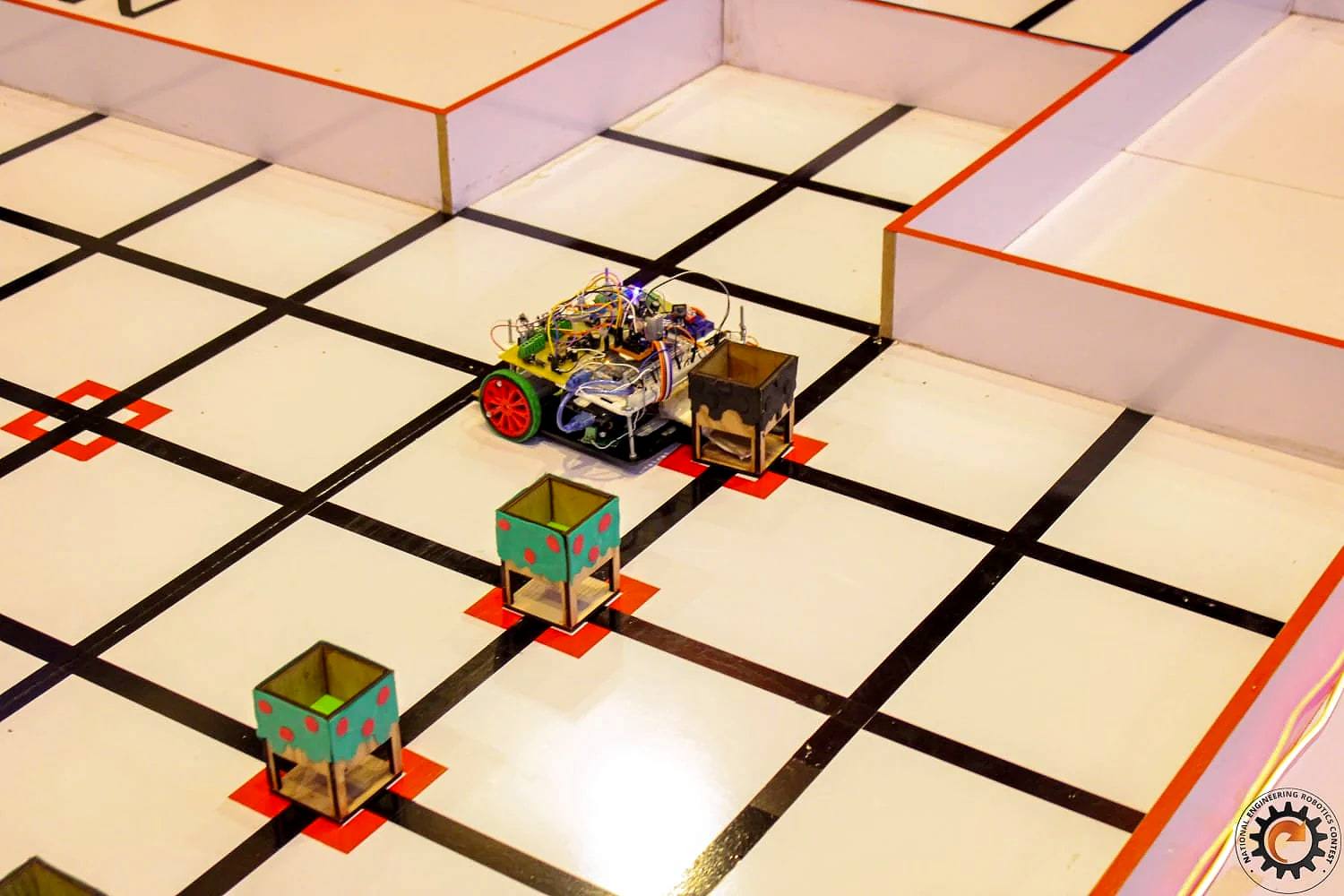
The tree-planting robot is a competition robot WhiteHat Design Studio built for the National Engineering Robotics Contest. The contest set a planting course: a walled arena, a grid of black lines and blocks marked as trees. The robot had to find its way around the grid and put each block where it belonged.
How the tree-planting robot works.
Plan on a grid
The robot selects a grid map for the course, which sets the route to each planting position.
Follow the route
A QTR-8A sensor array reads the black lines, and PID control keeps the robot on them.
Plant
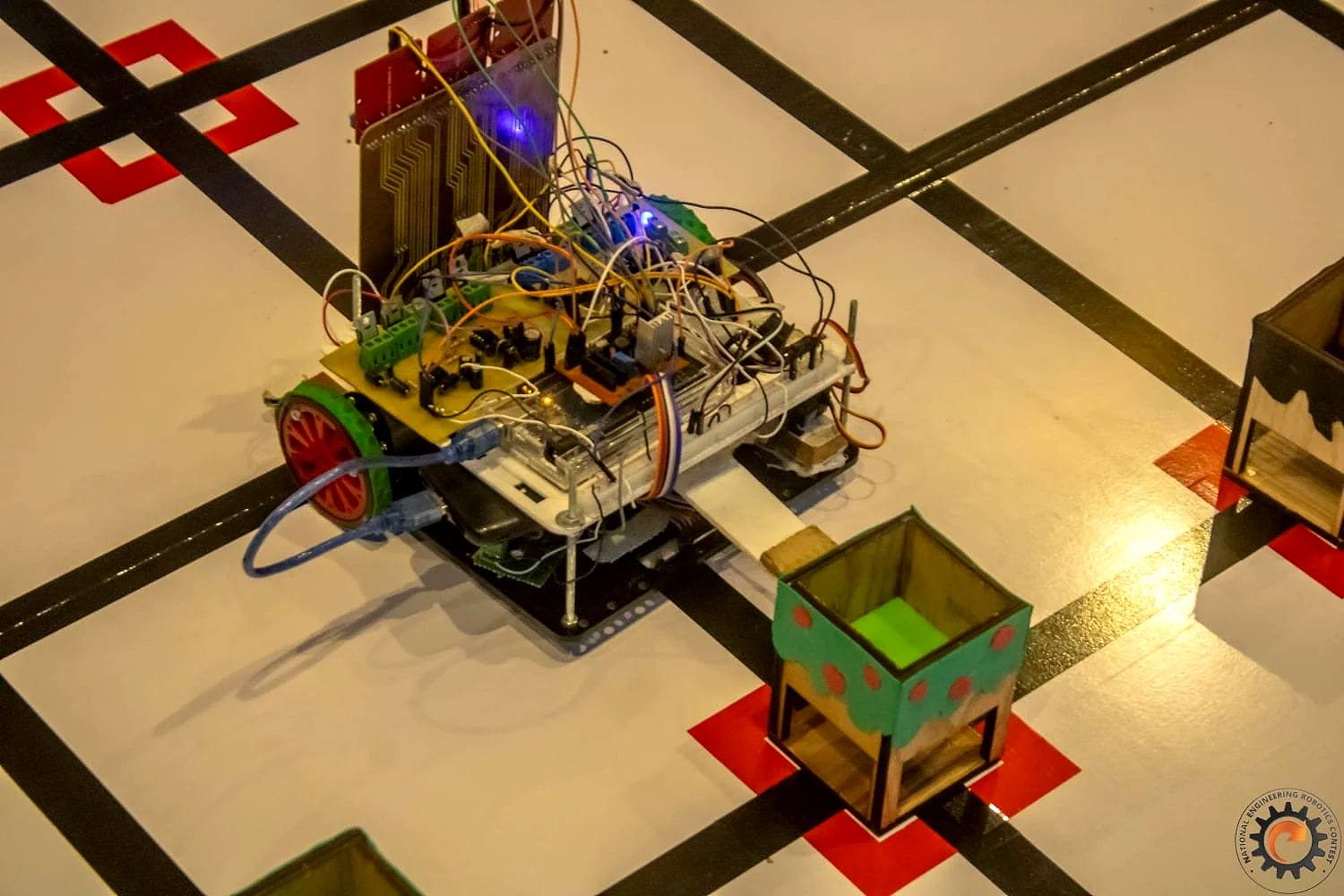
A purpose-built mechanism carries the tree-marked blocks and places them in the arena.
On film.
Clips from the log. They have no sound, and each one says what happens.
Questions about the tree-planting robot
What does the tree-planting robot do?
It follows a grid of lines on the contest arena, works out where to plant and places tree-marked blocks with its own mechanism.
How does it follow the course?
A QTR-8A sensor array reads the black lines, and PID control keeps the robot on them.
Recognition
- Best Engineering Design Award at the National Engineering Robotics Contest, selected from 22 teams.
What we do not claim
- This is a competition prototype, built for the contest arena and its rules.
Read further
Tell us what has to work.
One sentence is enough. An engineer will reply.